 |
 |
|||||||||||||||||||
| home
reproduction
historical woodwinds
|
Full information about the
Bohlen-Pierce project is given in the article
elsewhere on this site, but briefly, the Bohlen-Pierce
scale is an alternative musical scale, arrived at by dividing the just
twelfth (a 3:1 frequency ratio) into thirteen steps, giving extensive new
musical possibilities to those involved in the creation of new music.
Some instruments built to this scale are now offered for sale to musicians.
~~~~
Soprano clarinet The BP soprano clarinet is the same size as the conventional Bb clarinet, and is played with the same mouthpiece. The fingering uses a combination of open finger holes and keywork derived from the Boehm system (the complete low note mechanism for the little fingers, plus a throat key for L1, a trill key and the register key). In
keeping with the futuristic nature of the BP project, the BP soprano clarinet
is constructed as standard in Delrin, a high quality synthetic material.
~~~~
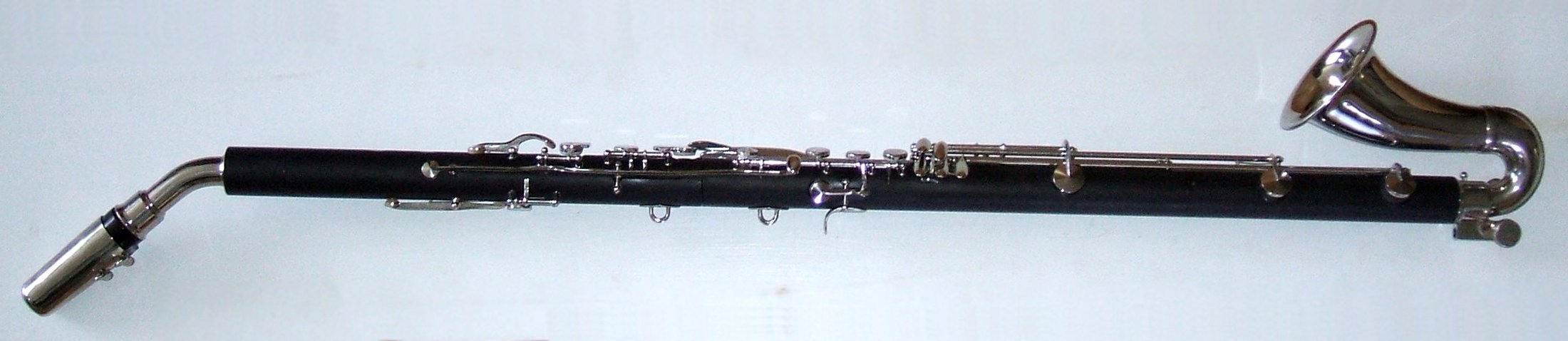
Tenor clarinet The
tenor clarinet is pitched six BP scale steps below the soprano clarinet,
making it roughly midway in length between the conventional alto and bass
clarinets. It is constructed similarly to an alto clarinet, with
a Delrin body and metal neck and bell. The keywork is as with the
BP soprano clarinet except with the addition of a bottom "Eb" key.
~~~~
Contra clarinet The contra clarinet is the largest size in the BP clarinet family, the same size as the Eb contrabass. Further
details will be posted as the prototype is developed and field tested.
~~~~
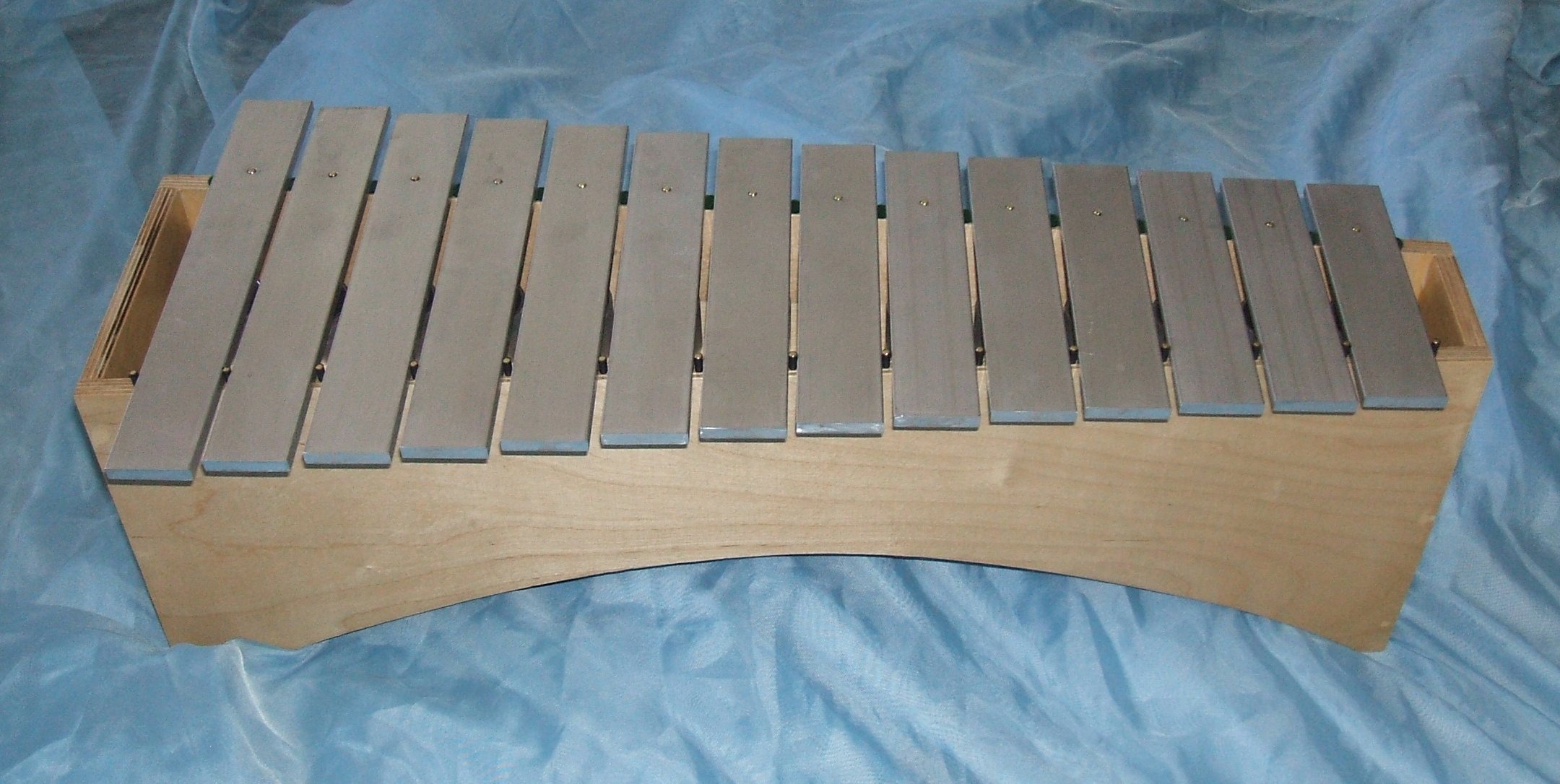
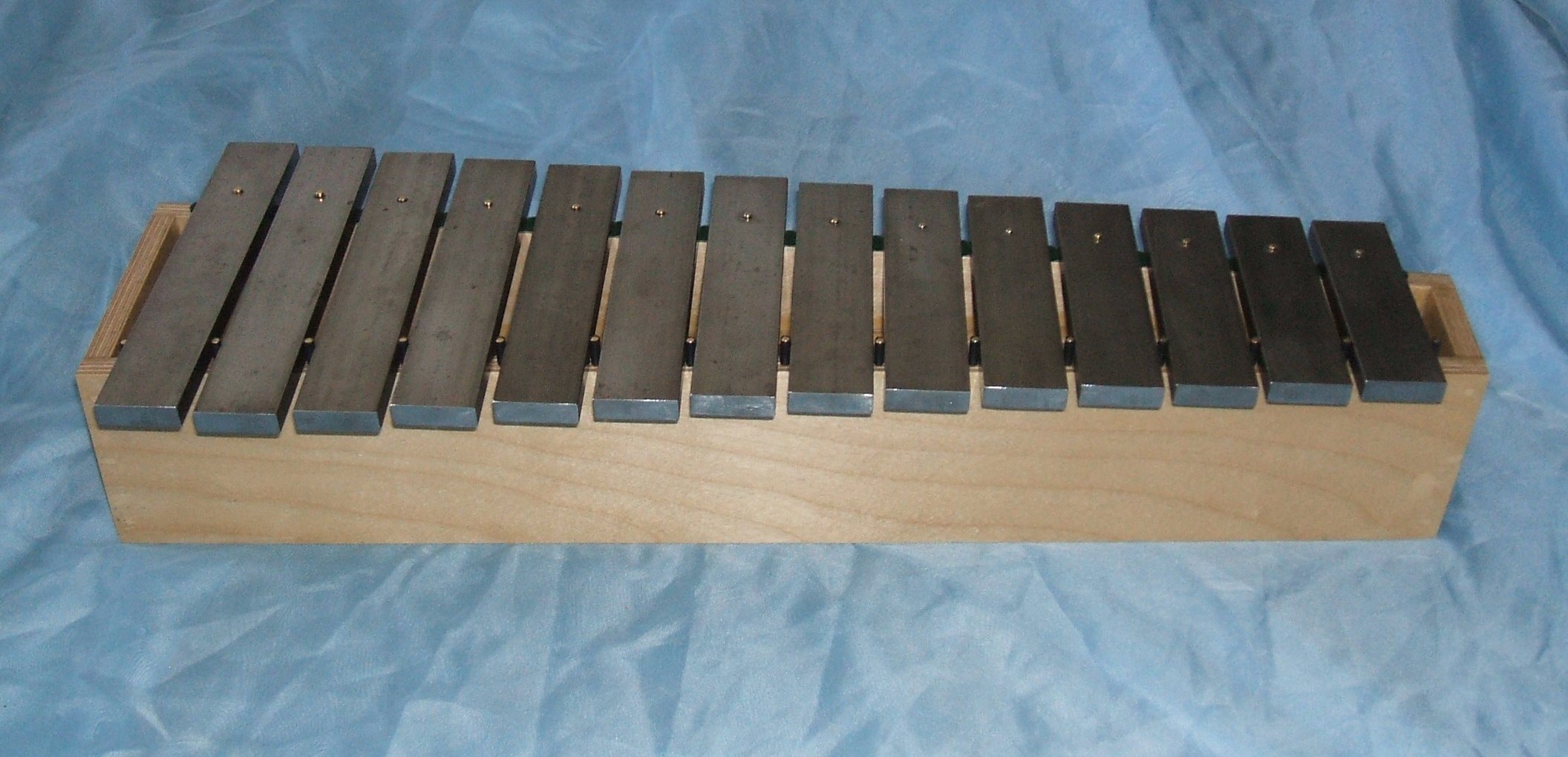
Metallophone and glockenspiel Various mallet instruments can be envisaged, to provide ready reference to the pitches of the equal tempered BP scale and for rhythmic accompaniment in performance. The metallophone has aluminum bars (as with the Orff metallophones used in schools), with aluminum resonator tubes, giving a soft, sustained sound. The normal range is 14 BP notes starting at 400Hz (coverering the second register of the BP clarinet). The glockenspiel uses steel
bars mounted in a wooden box, as with a conventional marimba. The
range is a tritave higher than the metallophone.
BP metallophone
BP glockenspiel |